Robotics
"Malfunction. Need input!" - Number 5
Vision Language Action: Model Development & Validation
version 2.9Vision-Language-Action explores how modern VLA models can translate perception, language instructions, and robot state into real physical behavior. Part 1 focuses on building and validating this pipeline using SmolVLA, the LeRobot framework, and a pair of SO-101 3D-printed robotic arms. This phase covers data acquisition, dataset quality, model fine-tuning, inference, real-time control, and systematic validation of a pick-and-place task. The goal is to understand not only whether a VLA can successfully control a physical robot, but also why it succeeds or fails and how factors such as training data, starting position, inference latency, camera input, and control software affect the resulting behavior.
Learn MoreCore Concepts
Natural language + vision models controlling real robotic arms for precise manipulation.
Heterogeneous Compute at the Edge
version 2.9This research builds upon the Vision Language Action work in Vision Language Action: Model Development & Validation and moves the R&D and validation into real-world edge deployment. Using custom inference and control software, a robotic system is deployed across Intel Core Ultra 3's heterogeneous compute SoC. The focus has now shifted to understanding how inference workloads map onto the CPU, iGPU, NPU, and how execution characteristics vary, and what is required to reliably deploy a physical robotic application outside of the original training environment. The goal is to determine not simply whether the model can run, but how effectively the complete system can be deployed across edge-class hardware.
Learn MoreCore Concepts
Natural language + vision models controlling real robotic arms for precise manipulation.
AprilTags
A reliable, camera-based fiducial system for perception, calibration, and robotic coordination.
AprilTags are high-contrast visual markers designed for fast, robust detection in real-world robotics environments. They provide precise 6-DoF pose information from a single camera frame, making them ideal for calibration, object localization, workspace mapping, and multi-robot coordination. Their simplicity is the point: clean geometry, predictable decoding, and stable tracking even under motion, glare, or partial occlusion.
This guide walks through how AprilTags work, why they matter in robotics, and how to integrate them directly into your workflow.
Read the Guide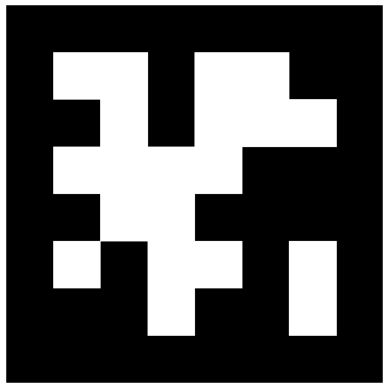 An AprilTag (36h11) representing the id '1'
Universal Robots UR5e
A collaborative arm built for precision.The Universal Robots UR5e is a versatile, collaborative robot arm designed for precise motion, safe interaction, and seamless integration into both industrial and research environments. As part of the e-Series lineup, it offers improved force sensing, enhanced repeatability, and a refined control architecture that makes it well-suited for automation tasks, prototyping, and advanced robotics experimentation.
This guide covers the essentials of working with the UR5e, from initial setup and workspace configuration to connecting the robot with external software frameworks and control pipelines.
Learn More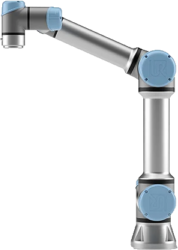 The Universal Robots UR5e
Getting Started with the SO-101
A beginner-friendly robot arm for makers and researchers.The SO-101 is the evolution of the original SO-100 robot arm, redesigned with a focus on reliability, simplicity, and smoother integration into modern robotics workflows. Developed by RobotStudio in collaboration with Hugging Face, this updated version improves on the original design with cleaner wiring, easier assembly, and upgraded leader-arm motors that deliver more consistent motion and better control fidelity.
This guide walks you through using the SO-101 with LeRobot, covering setup, calibration, and the core workflow needed to get the arm running in a development environment.
Learn More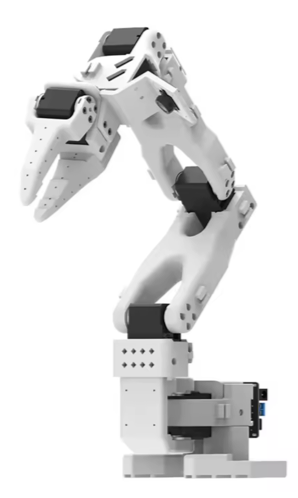 The SO-101 robot arm
Trossen WidowX AI
A powerful, modular robot arm built for real-world experimentation.The WidowX AI series from Trossen Robotics offers a compact, high-precision arm designed for research, prototyping, and modern robotics development. Built around Dynamixel actuators and a modular frame, the platform delivers smooth motion, reliable repeatability, and a level of control fidelity that makes it well-suited for machine learning workflows, perception-driven tasks, and custom automation projects.
This guide covers setup, calibration, and integration of the WidowX AI into a development environment, including the software tools and control pipelines commonly used in research.
Coming Soon: November 26, 2026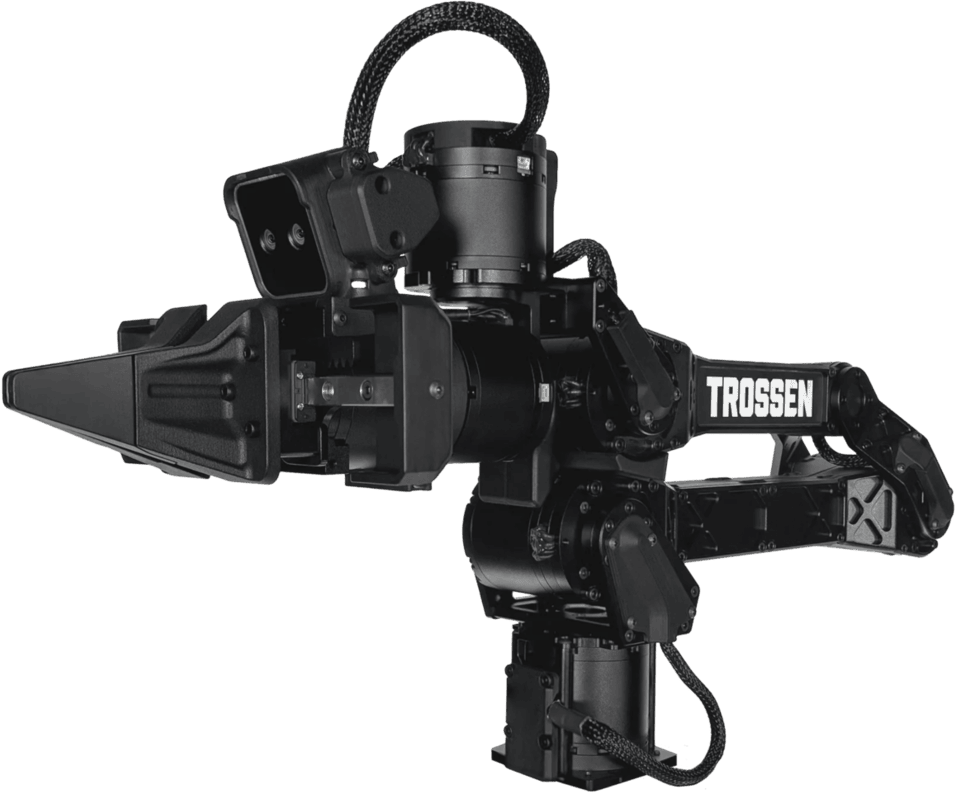 Trossen WiddowX AI
Precision Engineering
High-reliability embedded systems, FPGA design, and robotics platforms built with uncompromising attention to detail.
Verified Performance
Benchmarked, stress‑tested, and validated across real‑world robotics and compute workloads.
Robotics & Control
Physical systems, precise motion, and intelligent actuation.