Heterogeneous Compute
"Never trust a computer you can't throw out a window." - Steve Wozniak
Vision Language Action: Model Development & Validation
version 2.9Vision-Language-Action explores how modern VLA models can translate perception, language instructions, and robot state into real physical behavior. Part 1 focuses on building and validating this pipeline using SmolVLA, the LeRobot framework, and a pair of SO-101 3D-printed robotic arms. This phase covers data acquisition, dataset quality, model fine-tuning, inference, real-time control, and systematic validation of a pick-and-place task. The goal is to understand not only whether a VLA can successfully control a physical robot, but also why it succeeds or fails and how factors such as training data, starting position, inference latency, camera input, and control software affect the resulting behavior.
Learn MoreCore Concepts
Natural language + vision models controlling real robotic arms for precise manipulation.
Heterogeneous Compute at the Edge
version 2.9This research builds upon the Vision Language Action work in Vision Language Action: Model Development & Validation and moves the R&D and validation into real-world edge deployment. Using custom inference and control software, a robotic system is deployed across Intel Core Ultra 3's heterogeneous compute SoC. The focus has now shifted to understanding how inference workloads map onto the CPU, iGPU, NPU, and how execution characteristics vary, and what is required to reliably deploy a physical robotic application outside of the original training environment. The goal is to determine not simply whether the model can run, but how effectively the complete system can be deployed across edge-class hardware.
Learn MoreCore Concepts
Natural language + vision models controlling real robotic arms for precise manipulation.
Early-Access Intel Hardware Setup
Bringing Prerelease Intel Hardware Online for AI, ML, and RoboticsWorking with prerelease Intel hardware means dealing with unfinished firmware, evolving drivers, and rapidly shifting toolchains, but once everything is configured, these platforms become powerful testbeds for modern AI and robotics. This guide walks through the full bring-up process: initial provisioning, OS setup, kernel tuning, GPU/NPU runtime installation, and the workflow needed to run multimodal models, robotics frameworks, and low-latency control loops on Intel's next-generation compute stack.
Read the Guide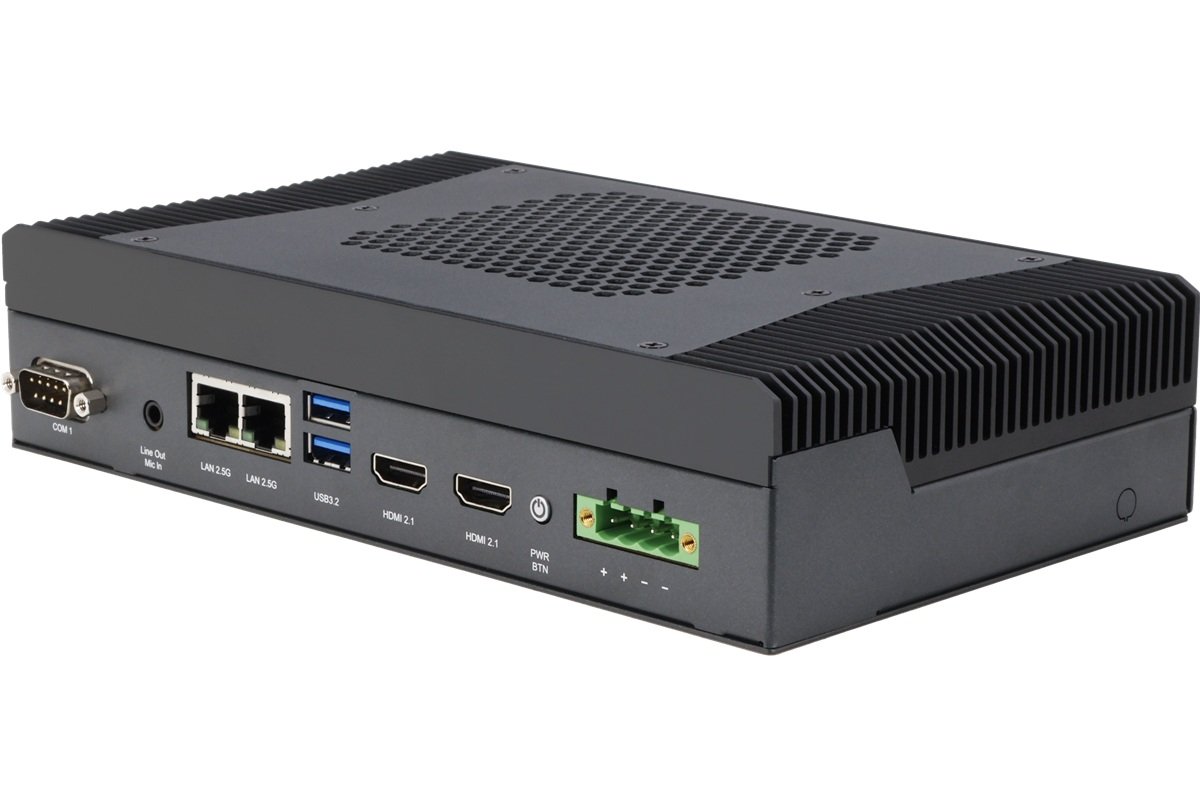 AAEON UP Extreme PTL Edge
Precision Engineering
High-reliability embedded systems, FPGA design, and robotics platforms built with uncompromising attention to detail.
Verified Performance
Benchmarked, stress‑tested, and validated across real‑world robotics and compute workloads.
Robotics & Control
Physical systems, precise motion, and intelligent actuation.